The short answer: most Detroit-area yard water problems trace to three sources - roof water dumped too close to the house, flat or wrong-way grading, and poorly drained clay-rich soil. The fix depends on which one you have.
The three usual causes
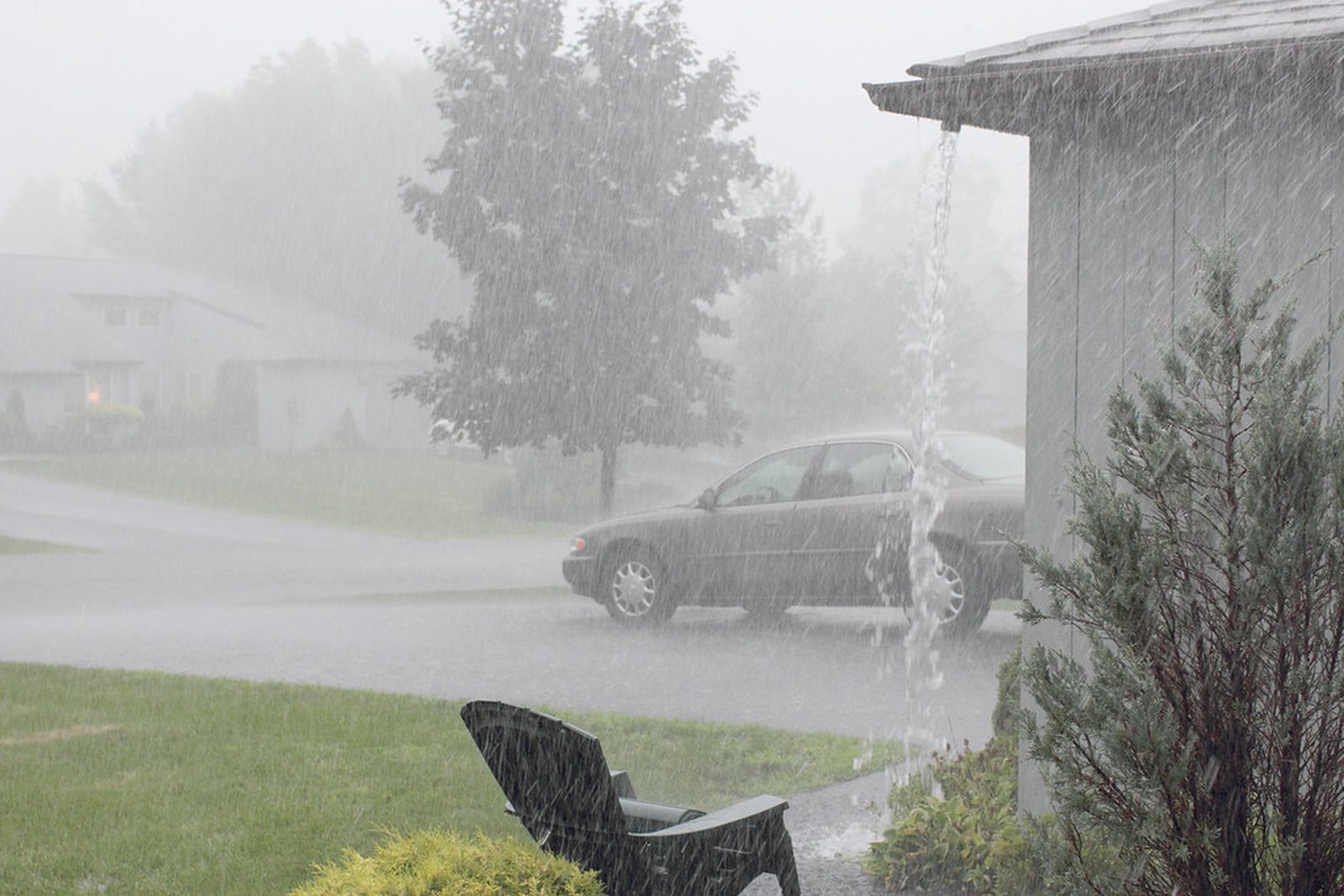
1. Roof water. The USGS calculates that one inch of rain puts roughly 600 gallons of water on every 1,000 square feet of roof. If downspouts dump that at the corner of the house, the foundation bed and the yard next to it soak it all up. Buried downspout extensions are often the least expensive meaningful fix.
2. Grading. Soil should fall away from the house for the first several feet. Over the decades, yards settle and get re-landscaped until the slope runs flat or backward. Regrading reshapes the surface; a french drain handles water moving below it.
3. Clay-rich soil. Wayne State’s urban geology research describes the area’s native soil as originally somewhat poorly drained glacial sediment. Water moves through clay slowly, so after a hard rain it has nowhere to go. Drainage systems give it a path.
Matching the fix to the problem
- Water only near downspouts: buried downspout extensions first - often enough on their own.
- Soggy low area in the yard: a french drain or catch basin routed to an outlet.
- Water along the foundation: exterior french drain; if it’s already inside, an interior drain and sump conversation.
- Whole yard slopes toward the house: regrading, sometimes combined with a drain.
What a good quote includes
However you find an installer, a quote worth trusting names the footage, the depth, the pipe and fabric spec, where the water will go, and what restoration is included. Published installation guides treat the fabric-lined trench and a real outlet as standard practice - a quote that skips either one deserves a question.